

Between the late 19th and early 20th centuries, private excavations represented a controversial chapter in the archaeology of the Vesuvian area. Driven by the desire to uncover valuable artifacts for resale, numerous art entrepreneurs acted without due caution, leaving a legacy of important discoveries but also of irreparable damage. Due to the lack of adequate legislation, the state failed to ensure the effective protection of archaeological heritage, especially outside Pompeii, until now the epicenter of study.
In this vein, two art historians from Torre del Greco, Giuseppe Maddaloni and Ernesto Pinto, undertook in-depth archival research that allowed them to reconstruct the history of archaeological discoveries in the area between Herculaneum and Torre del Greco , with particular attention to the sites of Villa Sora and the Terme Ginnasio. Using ancient place names and unpublished documents, the two scholars mapped the finds dating back to the 17th century, bringing to life a heritage submerged by the ravages of time and the sea.
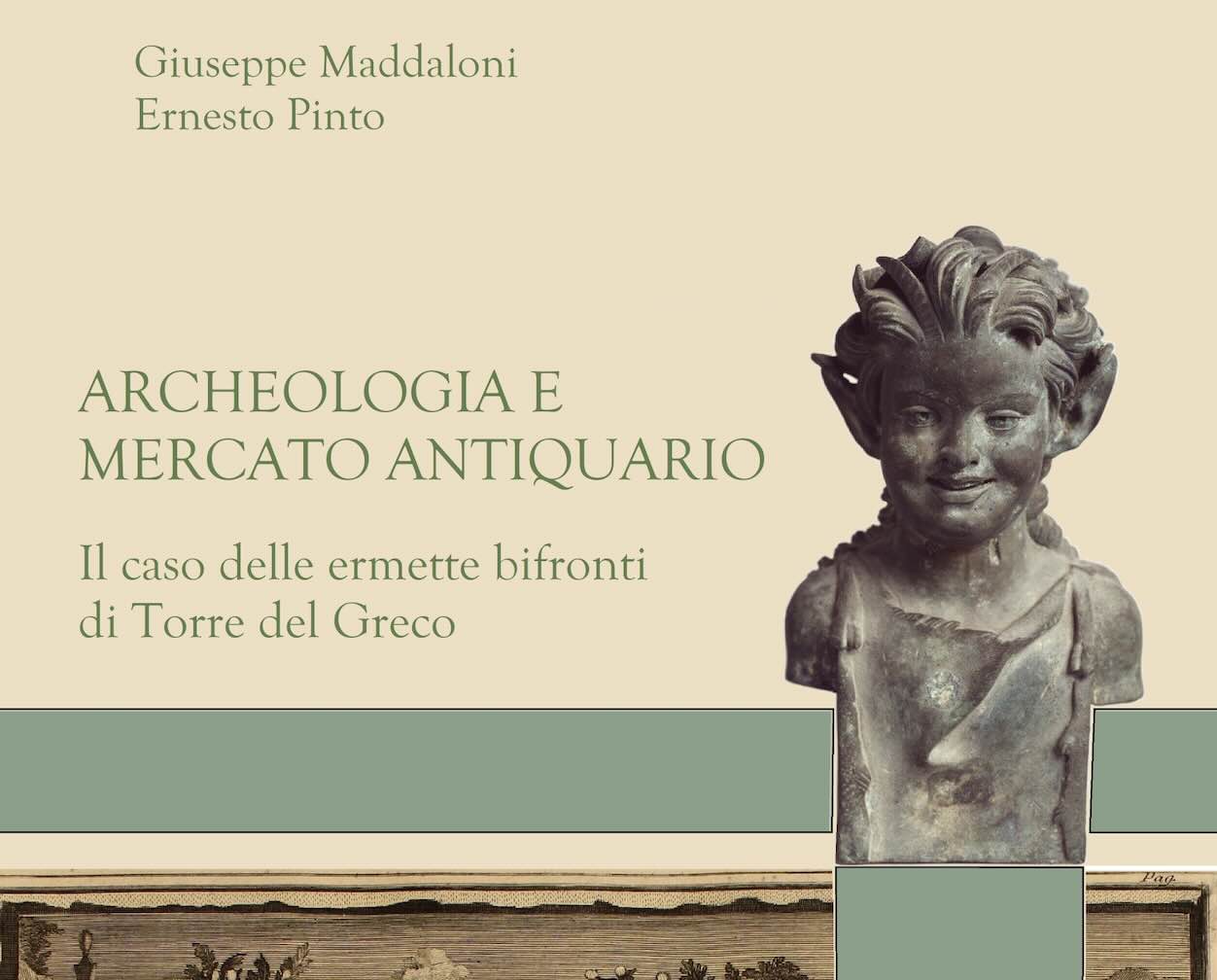
The fruit of this meticulous investigation is the book "Archaeology and the Antiques Market: The Case of the Two-Faceted Hermitage of Torre del Greco" (EAN Publisher, 175 pages), which will be presented on June 9th in the auditorium of the Banca di Credito Popolare di Torre del Greco. The presentation will be moderated by journalist Carlo Avvisati.
The focus of the research is on the two-faced hermitages, ancient decorative elements that once adorned a balustrade in front of the Terme Ginnasio, now lost. Through meticulous study of sources and archives, the authors have traced the path of these artifacts, now housed in important museums such as the LACMA in Los Angeles, the Petit Palais in Paris, the Staatsoper in Berlin, the Victoria and Albert Museum in London, and the MAN in Naples.
"Starting from the two-faced hermits, we also found other extraordinary artifacts from the Contrada Sora, such as the Satirelli Cacciatori (Hunting Sages), a marble Labrum (Labrum), and a precious lapis lazuli eagle preserved in Baltimore," explains Maddaloni. Among the most fascinating discoveries, he adds, is a fresco depicting a scene of sacrifice, rediscovered in the MANN's storage rooms after disappearing from historical memory.
Pinto emphasizes how the work has taken on the character of a true historical mystery: "The investigation has uncovered a complex international art trafficking network between the 19th and 20th centuries, thanks to the cross-referencing of documents, correspondence, maps, and photographs. I felt like a detective from another era, even though many avenues remain to be explored."
This research not only sheds light on a dark period of Vesuvian archaeology, but also confirms the artistic and cultural value of Torre del Greco's heritage, now finally brought back to light and into collective memory.
 Chronicles of Campania
Torre del Greco: Tons of waste that had been lingering on Via Ruggiero were removed overnight.
Torre del Greco – It was an unspeakable disgrace for all to see. Especially the residents, who finally got some answers...




This appears to be a useful and interesting investigation, but much remains to be ascertained; the authors have done a meticulous job, but the finds seem to have disappeared in mysterious ways, and the maps do not always match. However, the text opens new avenues and calls for further archival comparisons, even if some notes appear to be written with errors or poorly executed.