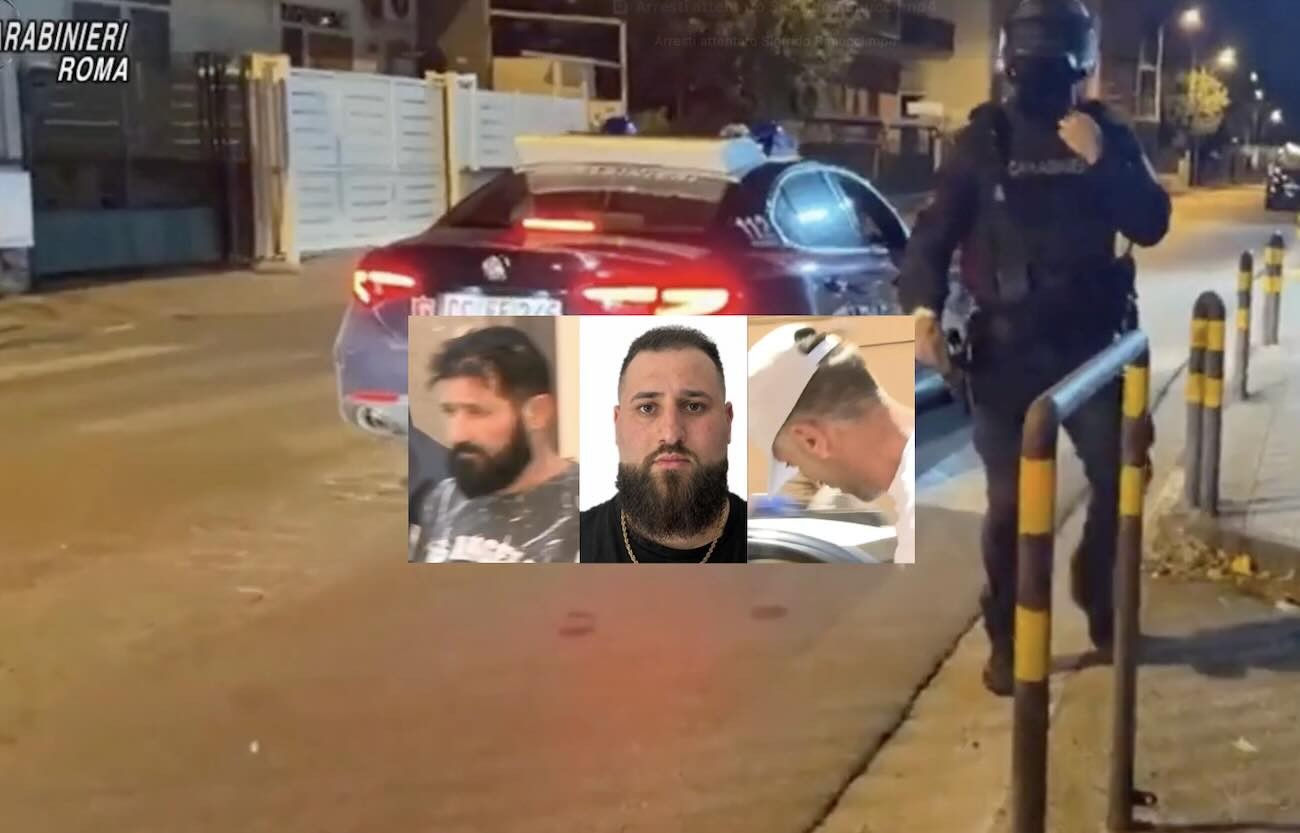
Rome – An attack planned with mafia methods: this is what the Court of Review wrote in justifying the confirmation of the precautionary measures against the four material perpetrators of the raid against Sigfrido Ranucci.
"An action planned and executed on the orders of a superior, supported by an organization capable of providing the perpetrators with support and protection, and implemented using methods objectively suited to evoke, in the eyes of the injured party, the intimidating force typical of mafia activity." This was written by the judges of the Special Section of the Court of Rome—a panel presided over by Rossella Prignani, with Francesca Coculo and Floriana Lisena on her associates—who rejected the appeal in its entirety from the defense of Antonio Passariello, Pellegrino D'Avino, and Marika De Filippis.
The judges believe that precautionary measures are necessary, as has already been "correctly recognized in the accusatory approach adopted and explored by the investigating judge," starting from the "danger of repeating similar crimes. This risk can be deduced primarily from the nature of the action, preceded by an on-site inspection and carried out through the division of tasks, the use of explosive material, and involvement in a structured criminal context, which reveal a non-occasional willingness to provide informed input into the planning and management of particularly serious conduct."
The D'Avino Review dealt with the explosive and with his partner he took care of the preparatory phase
The reasons for the lawsuit confirm that D'Avino played "a central role in the procurement of the explosive material" used in the bombing of journalist Sigfrido Ranucci on October 16, 2025, outside his home in Pomezia.
According to the reconstruction supported by the judges, four people participated in the attack, each with a specific task: Antonio Passariello and Saverio Mutone handled the execution phase, driving to the victim's home in the car used in the crime and planting the device; D'Avino and his partner Marika De Filippis handled the preparatory phase, carrying out an inspection on October 10, 2025, six days before the explosion.
The judges clearly rejected the defense's argument that D'Avino's position was based on "telephone location data alone."
The conversations intercepted months before the gang's arrest were of great importance to the preliminary investigation judges.
On February 25, 2026, in his car, D'Avino spoke openly about finding a new explosive device, revealing that the explosive previously used had been supplied to him by "a certain Antonio." But it was the conversation on March 30—in the apartment he shared with De Filippis—that, for the judges, provided the most significant evidence: commenting on the day's news about the attack, D'Avino asked his partner the color of the car used "when we went to commit the crime," and she replied that it was black.
According to the judges, this conversation demonstrates that the suspect "knew the purpose of the inspection" and wasn't simply relaying information learned from third parties. The investigation also revealed the group's attempts to respond to the investigation's findings: searching the house for bugs after a search, swapping SIM cards, and, most importantly, in the conversation of April 10, 2026, a detailed plan developed by D'Avino himself to temporarily expatriate Father Passariello.
Regarding precautionary measures, the panel recognizes all three risks envisaged by law: tampering with evidence, escape, and repeat offenses. The Passariello case, in particular, is crucial, as the judges believe it reveals the existence of a "higher organizational level" behind the attack, a mastermind who has so far remained unnamed but who, according to the documents, is ready to support the perpetrators "should they be discovered."
Defense attorneys are being held by Valter Lavitola to prepare the defendant's spontaneous statements to be given at the preliminary hearing.
Meanwhile, this morning, Valter Lavitola's lawyers visited Rebibbia prison, where they met with their client for a "long conversation" ahead of the hearing before the Court of Review scheduled for September 7th. Valter Lavitola is accused of instigating the attack against Ranucci. Lawyers Sergio and Arturo Cola briefly commented on the meeting, which was supposed to help them finalize "with Lavitola the content of the spontaneous statements he will make on Monday" before the Supreme Court of Appeal. "We found him to be satisfactory," the two criminal lawyers simply said.
The fixer will have to clarify some aspects of the affair in his spontaneous statements, having already made a detailed confession that investigators are examining.
Frequently Asked Questions about the Assassination of Sigfrido Ranucci
Here are some common questions regarding the attack and the ongoing investigation.
Who are the suspects involved in the attack?
The main suspects are Antonio Passariello, Pellegrino D'Avino, Marika De Filippis, and Saverio Mutone.
What is Valter Lavitola's role in the attack?
Valter Lavitola is accused of instigating the attack on Sigfrido Ranucci.
What are the reasons for the Review to confirm the precautionary measures?
The preliminary investigation highlighted the risk of the crime being repeated and the existence of a criminal organization behind the attack.
When did the attack against Ranucci take place?
The attack took place on October 16, 2025, in front of Ranucci's home in Pomezia.